
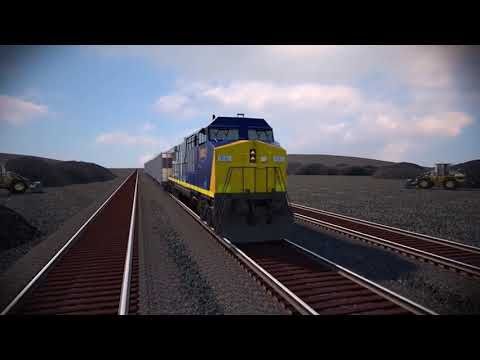


Oakland (Special to ZennieReport.com) – On Friday, June 28th, 2025, the Oakland Bulk and Oversized Terminal, a long-planned bulk terminal designed to fill a yawing service gap in Port of Oakland-related operations, won yet another and its final legal battle against the City of Oakland. The OBOT project, established after a developer competition in 2008, is designed to transport dry-bulk commodities like iron ore and coal, and is to use covered rail cars. But a swell of political opponents, including some Oakland elected officials, backed directly or indirectly by once coal investor Tom Steyer, appeared starting in 2014. This caused the development of a series of lies about OBOT.
OBOT Is Not A Coal Terminal But The Fake News Says Otherwise
The fact is that the Oakland Bulk and Oversized Terminal concept was formed by California Capital Investment Group Managing Partner Phillip Tagami as an answer to the Federal Government’s call for a development that would replace the low-skilled, well-paying jobs lost by the closure of the 430-acre West Oakland Army Base in 1999. The resulting developer competition yielded a series of proposals that did not meet the jobs requirement, except Phillip Tagami’s. Phil, who successfully developed the Oakland Rotunda and The Fox Theater, was poised to pull-off his crowning achievement. Then the lies started.
The first of the series of lies about the Oakland Bulk and Oversized Terminal was that it was a “coal terminal”. This lie was advanced by two Oakland & Berkeley-based publications, one independent and for-profit and the other independent and non-profit. The Oakland Bulk and Oversized Terminal is a bulk terminal that will be capable of transferring various bulk commodities via containers and from rail-to-ship and from America via its Oakland place to ports of call in Asia.

Phil Tagami’s plan was and is to establish a zero-emissions just-in-time bulk terminal. The original development agreement called for OBOT to handle iron-ore, coke, coal, and other dry bulk materials. Of all of them, coal emerged as Oakland’s economic development interest and only because the City of Oakland, assisted by a study written by The Tioga Group, determined that it offered the best market for the OBOT to achieve good fiscal performance.
It wasn’t until Tom Steyer spread his money around Oakland politicians and non-profit organizations in 2013 that “coal” turned from a no-big-deal issue to a big-deal one. In order to advance Tom Steyer’s cronies’ attack on OBOT, they had to discredit the bulk terminal by trying to make it look like it was a coal terminal. That includes the aforementioned media, which also in one organization’s case, received some of its money from members of the Oakland City Council, as you will learn here.
City Of Oakland Lied About Its Involvement In Selecting The Coal Market For OBOT
What happened after that led to the second lie. The City of Oakland, which in the form of City of Oakland Economic Development / OBOT project manager Pat Cashman hired The Tioga Group on behalf of Oakland (not OBOT) to both evaluate the market for bulk materials, with an emphasis on coal as well as the ability of Phil Tagami’s team to meet the challenge presented by developing the bulk terminal in 2011, sounded a new cry in 2016: that it did not know coal was part of the OBOT materials transport mix until 2015. The fact is, the City did not tell the truth. A fact that was made clear in the presentation of the Tioga Group Proposal Memo dated December 22, 2011. From Oakland News Now Blog here:
Tioga Group Proposal To Oakland Community and Economic Development Agency Dated December 22, 2011
Proposal
Assistance for Oakland CEDA: Break-bulk Opportunity
(draft as of December 22, 2011)The Tioga Group, inc. (Tioga) is pleased to offer this draft proposal to the City of Oakland’s Community and Economic Development Agency (CEDA). Note that it is a draft For CEDA’S review and comment. In this way Tioga expects to be able to match is, proposed work plan and deliverable exact to what it is the will benefit CEDA the most.
BACKGROUND
CEDA has been offered the opportunity to conduct business at the Port of Oakland. The site is Wharf 7 as described in the current report from HDR‘ This wharf is believed to be suitable as a break—bulk Facility, and possibly at roll-on, roll-off facility. Until now the locations has been a break—bulk facility primarily for military, either break-bulk or large vehicles. However, in recent years because of the lack of a usable rail route and connection to the mainline at its prior Wood Street yard, the wharf has been used only for storage and ancillary activities primarily related to the construction of the new eastern half of the San Fi‘ancisco-Oakland Bay Bridge.
The present master plan for development of this area’has been designed by HDR. It calls for Wharf 7 to be retained. Hence, that raises the question: how best can the wharf be utilized? One option is to resurrect a break—bulk service. This has an attraction due to two factors.
First, the master plan For the revitalized site includes providing an active rail service via a dedicated siding served by the planned, new Oakland Gateway Rail Enterprise (OGRE) switching railroad, and thence connecting to the Union Pacific Railroad (UPRR), but not to the BNSF Railway. The expectation is that this will attract shipments for prior or subsequent movement by rail.
The second is that the site will be surrounded by a new, large logistics complex The prospective tenants at the complex will have rail. access also, and in connection with their business may want rail service to a nearby break—bulk Facility for import and export cargos. The developer of that facility has referenced an “Oakland Bulk Oversized Terminal”. It needs to be determined if that reference is to the Wharf7 Facility; if it is not, it needs to be determined what the reference is to.
Oakland’s Community and Economic Development Agency (CEDA) has a number considerations entering into a commercial venture to provide such service for either intracoastal barge service 01′ international cargo ship service, The first is an assessment of the market for such a service. All other considerations follow; primary among them is the viability of the proposed, new rail switching service contemplated by OGRE.
OBJECTIVE
The objective to be achieved ’by the project proposed herein is an initial assessment of the market for the proposed setvice(s) that might be conducted at Wharf 7.
SCOPE
The scope of the project has three parts. The first is a review of the history of such cargos
moving to / from the West Coast of North America (WCNA); the second is an assessment of the
competitive aspects as posed by nearby, alternative port Facilities; the third is an explanation of attraction, if any, of the availability of inland rail service as compared to alternative ports.Depending on the outcome of this first project, it is easy to envision additional, key considerations. But, those are necessary to investigate only it the market and service prospects are attractive.
APPROACH and QUALIFICATIONS
Tioga has the benefit of creating a very recent (September 201l) review and forecast of most of the possible markets for the San Francisco Bay Area Bay Conservation and Development Commission (BCDC) as part 0.!” its update to its Seaport Plan. Also, Tioga has the benefit ofits past projects at a number of nearby ports with which a facility at the Port of Oakland would compete. Finally, Tioga can explain the economics and service considerations facing an importer/exportei’ interested in moving goods via inland rail or truck via the Port of Oakland.
Hence, Tioga’s approach is to provide CEDA a broad, but ‘not necessarily deep, assessment. The goal would be to look for opportunities and fatal flaws. This has the advantage of minimizing CEDA’s required expenditure for this study and sorting through the options for the next phase of a more complete investigation of options that survive this project.
Tioga’s topical expertise is freight transportation. It has completed project for a number of ports and Clients investigating port services, including the Ports of Oakland, Richmond, Redwood City, and Stockton. In the course of these assignments, it has had occasion to better understand the services and interests of the Ports of San Francisco, West Sacramento, Hueneme, and Humboldt Bay. It has completed a multitude of studies of marine terminal operations across the country, provided project reviews For the US Corp of Engineers, compared modal economics across alternate intermodal and ti’ansload routings, surveyed customers as to decision processes [701′ selecting ports and i‘outings, and served many economic development and municipal planning organizations particularly with assistance in understanding the nature of the patronage of freight transportation facilities in a specific. area (including all of California for both local and transiting cargos). ‘
WORK PLAN
Tioga envisions live tasks to accomplish this project,
Task 1 — Kick off meeting
Clarify work plan. Gain common acceptance of work plan. Obtain any appropriate materials that CEDA can access. Investigate other potential sources and/or contacts that are familiar with this subject
Task 2 — Review of cargo volumes and forecasts
Review existing cargo history and forecast as provided to BCDC. Look For history of activities over a break—bulk or 10-10 clock; not just commodity descriptions. Try to ascertain how certain potential target markets (e.g. military, oversized vehicles and equipment, project cargos, etc. are categorized.
Task 3 — Competitive assessment
Ask competitors (other ports) and Oakland based forwarders and about existence of break—bulk facilities and the nature of business being handled at such facilities. Might try to induce cooperation by offering to provide a synopsis of what is learned From ports that are identified as having such target cargos and bi‘eak—bulk activities either in ocean—going ships or barge and both international and domestic cargos.
Compare and discuss potential for l) diversion of existing cargo movements and 2) potential
cargos From new projects and Foreign Trade Zone operators.Task 4 — Discussion of modal economics for import/expert cargos
Explain the critical considerations that determine the likely routing decisions by beneficial cargo owners (BCOs). Try to determine if any of these determining factors provide an opportunity for this facility and why such would be of value to the ECG and/or its forwairclet/agent.
Task 5 — Draft and Final Report
Create a clratt of a final report. Submit it to CEDA for comments, and conduct a meeting with
CEDA to review the dta ft and comments. Based on reviews, createand submit a final report.DELIVERABLE
The deliverable is a report on opportunities that might use Wharf 7 at the Port of Oakland.
PROJECT MANAGEMENT
ScheduleTioga can start this project with one week’s notice. An elapsed time of 6—8 weeks is expected depending on timely cooperation from other ports. Tioga will provide a-weekly, Verbal update on project progress.
Staffing — Tioga
Steve Nieman, Principal, will be Tioga’s Project Manager, client liaison, and primary analyst.
Dan Smith, Principal, will also be an analyst primarily on the topics of market size, cargo
forecast, and an evaluation of selected competitive ports and services.Staffing — Client
CEDA’S key personnel will need to be available for a 2—3 hour Kickoff, to provide written
comments on a draft report, and for a 2—3 hour review of the draft reportFees and Expenses
Tioga’s requirements For pro Fessional Fees and expenses will not exceed $l5,000.
Invoice and TermsTioga will invoice monthly with payment in full expected within 30 clays oF the invoice date.
Expenses will be passed through at costCLOSING
Tioga looks Forward to assisting CEDA with its evaluation of this commercial opportunity
because it is unusual for a city to consider sponsoring, even operating, a Freight transportation facility such as Wharf 7, although to do so is rather common in some ports.CONCURRENCE
For: The Tioga Group, inc. For: City oanklancl, Community & Economic
Development AgencyBy: Stephen C. Nieman By:
Title: Principal Title:
City Of Oakland Covered Up Tioga Group Report
While there is clear communication and documentation that the City of Oakland did indeed enter into contract with the Tioga Group and the Tioga Group produced a draft report and submitted said report to the City of Oakland, specifically to Pat Cashman on April 22, 2012, sources (who do not wish to be named but have given supporting documentation to this effort) explain that when Mr. Tagami filed a lawsuit against the City of Oakland’s Coal Ban in 2017, Mr. Cashman repeatedly denied the existence of said contract and report between 2012 and 2016.
For example, in an email dated June 30, 2016 to Assistant City Administrator Claudia Cappio from Pat Cashman, Mr. Cashman says, “the City did not enter into the contract with Tioga and no analysis was ever performed.”
Mr. Cashman claims that the contract was not entered into and therefore the analyses by the Tioga group was not performed because CCIG, “would not cooperate with Tioga, without first entering into a Confidentiality Agreement that was unacceptable to Tioga.”
On April 4, 2012 Mr. Nieman of the Tioga group emailed the above referenced signed confidentiality agreement, that Mr. Cashman later claims Tioga had a problem with and therefore was never signed to CCIG’s attorneys.
City of Oakland Withheld Final Tioga Report From Phil Tagami and CCIG Until Fall 2016
Reportedly, despite several requests, the City of Oakland withheld the Tioga report from CCIG from April 2012 when the City first received the draft report from the Tioga group and September 2016. The report was finally given to CCIG by Mr. Doug Cole of the City of Oakland in September 2016, documentation only after CCIG spoke directly with Mr. Steve Nieman of the Tioga group and Mr. Nieman confirmed the reports existence.
In an email dated September 23, 2016, Mr. Nieman forwarded his April 19th, 2012 draft report to Doug Cole at Mr. Tagami’s request because Mr. Nieman did not feel comfortable providing the report to CCIG himself, since the report was completed at the request and under contract with the City of Oakland, where Pat Cashman was project manager. Mr. Cole then forwarded the Tioga report to Mr. Mark McClure of CCIG on September 27, 2016.
Due to the City of Oakland’s repeated denial of the existence of the Tioga Group Report and their continued lack of desire to cooperate with Insight Terminal Solutions / CCIG’s repeated requests to provide documentation and communication regarding the report, on May 5, 2017 CCIG filed a subpoena to produce documents, information, or objects, or to permit inspection of premises in a civil action.
In a deposition of Pat Cashman on August 28, 2017, Cashman affirms the existence of a draft report by the Tioga Group in regards to (the Insight Terminal Solutions / CCIG) OBOT and that a confidentiality agreement was in fact signed by the Tioga Group, despite his email to Ms. Cappio on June 30, 2016 saying that a confidentiality agreement was not signed.
All of this happened as the City of Oakland and the San Francisco Bay Area Media crafted a cover narrative that it was Phil Tagami who was “bringing coal to Oakland”, when it was the City of Oakland itself, in the form of economic development specialists Pat Cashman and Doug Cole, who played lead roles in the formation of idea of shipping coal as a bulk commodity through Oakland, and as far back as 2011.
The Tioga Group Report For City of Oakland
The second paragraph of The Tioga Report presents the City of Oakland’s true intentions and simultaneously indicts much of the media – it points to Oakland, and not CCIG, as the “owner” but not the “operator” of the proposed bulk terminal. Note:
The City of Oakland expects to become the owner, but not the operator, of new facilities that will occupy the space presently owned and operated by the Port of Oakland in the new, West Oakland Gateway development. In particular, the facilities that are the topic of this report are what are presently known as Wharfs 6-1/2 and 7 plus the railroad right of way currently known as the Oakland Terminal Railroad (OTR) spur between Wharfs 6-1/2 and 7 and a) its rail connection with the Union Pacific Railroad (UPRR) and b) to/from a proposed new rail yard (not yet named) to be constructed by the Port of Oakland (Port) as part of the site of the former Oakland Army Terminal as recently acquired by the Port.
This paragraph points to what CCIG was supposed to do within the development framework:
As for the portion being developed by the CCIG team, Oakland Global, the two key components that are the topic of this report are the facility at Wharf’s 6-1/2 and 7 to be known as Oakland Bulk and Oversize Terminal (OBOT) and the switching railroad to be known as Oakland Global Rail Enterprise (OGRE). Apparently, CCIG’s business model for both OBOT and ORGE involves hiring management (as either employees or independent contractors) for both enterprises. Apparently it has already selected advisors and/or companies to provide the management of these services e.g. Stone, IRC, HDR, Kinder Morgan, etc. Similarly, apparently CCIG and its advisors have made some inquiries and maybe some commitments to such manager/contractors.
And regarding Kinder Morgan, Phil Tagami personally fired that organization because it backed off its agreement to use the covered rail cars Mr Tagami insisted on for reasons of environmental mitigation. Lay observers in the media, who present the matter of covered rail cars as akin to buying a train set at Walmart, miss the fact that such orders are custom-made for the client. More like a tailored, custom-made suit that’s a “one-off” product for the needs of the buyer. Covered rail cars are in normal use in the coal and commodity industry in America, and the idea that “fires” start in them is completely unfounded.
Finally, Here’s Evidence The Tioga Report Was Written So The City Of Oakland Could Replace Phil Tagami and CCIG
Finally, on page 3, paragraph 3, of The Tioga Report, is where we see the true intentions of the document: to be used as a backer for the City of Oakland to remove Phil Tagami and CCIG and replace the organization with another developer. Since it was Phil who had the idea of building the bulk terminal, the result would have been Oakland essentially stealing the project Phil used to win the City’s own Oakland Army Base Redevelopment Competition, and make it the City’s entity. Instead, what Phil did was fire Kinder Morgan and established a relationship with John Siegel and Insight Terminal Solutions. Here’s the damning paragraph.
For this report, the point is: While Tioga is not privy to all the qualifications of all personnel on the CCIG Team, Tioga does not see anyone with sufficient skill on this topic. What it is that the CCIG Team states that it wants to do may or may not be of value to the customers.
Tioga Report Shows City of … by Zennie Abraham
And in the matter of the 2018 Oakland Coal Ban case the City of Oakland lost, Oakland ignored its own agreement with OBOT in the crafting of the coal ban legislation. To understand why, read below.
This also from Oakland News Now Blog:
Oakland via The Internet- In this Insight Terminal Solutions (ITS FAQ) Oakland OBOT Update we learn, and are reminded, that the City of Oakland (in this case represented by Oakland Mayor Libby Schaaf and Oakland Councilmember Dan Kalb of District 1) openly and willfully violated its own development agreement with California Capital Investment Group Managing Director Phil Tagami and Prologis in 2013. That was in the process of creating the Oakland Coal Ban that was struck down in court in 2018.
That assertion comes from a clear text from the same development agreement that mentions the City of Oakland (as “City”) and dated: July 16, 2013:
3.4.I Future City Regulations. Except as otherwise specifically provided in this Agreement, including, without limitation, the provisions relating to (a) regulations for health and safety reasons under Section 3.4.2 below; (b) regulations for Construction Codes and Standards under Section 3.4.4 below; and (c) provisions relating to the payment of City Application Fees pursuant to Section 3.4.5, below, City shall not impose or apply any City Regulations on the development of the Project Site that are adopted or modified by City after the Adoption Date (whether by action of the Planning Commission or the City Council, or by local initiative, local referendum, ordinance, resolution, rule, regulation, standard, directive, condition, moratorium that would: (i) be inconsistent or in conflict with the intent, purposes, terms, standards or conditions of this Agreement; (ii) materially change, modify or reduce the permitted uses 01″ the Project Site, the permitted density or intensity of use of the Project Site, the siting, height, envelope, massing, design requirements, or size of proposed buildings in the Project, or provisions for City Fees specified in Section 3.4.5 below and Exactions as set foflh in the City Approvals, including this Agreement; (iii) materially increase the cost of development of the Project (subject to the acknowledgement as to the cost of Exactions specified in Section 3.4.6 below); (iv)materia11y change or modify, or interfere with, the timing, phasing, or rate of development of the Project; (v) materially interfere with or diminish the ability of a Party to perform its obligations under the City Approvals, including this Agreement, or the Subsequent Approvals, or to expand, enlarge or accelerate Developer’s obligations under the City Approvals, including this Agreement, or the Subsequent Approvals; or (vi) materially modify, reduce or terminate any of‘ the rights vested in City Approvals 01′ the Subsequent Approvals made pursuant to this Agreement prior to expiration of the Term. Developer reserves the right to challenge in court any City Regulation that would conflict with this Agreement or reduce the development rights provided by this Agreement, provided that such City Regulation directly affects the Project; provided, however, Developer shall first follow the dispute resolution procedures in Article VIII.
That entry in the development agreement formed the basis for Phil Tagami’s successful attack on, and court rejection of, the Oakland Coal Ban that was approved by the Oakland City Council on Monday, June 27, 2016.
As Vince Chhabria, Judge of The United States District Court for the Northern District of California, wrote in the opinion framing his order for the City of Oakland to terminate the Oakland Coal Ban that was targeted at Insight Terminal Solutions OBOT Development:
As a general matter, development agreements are contracts between local governments and developers that freeze existing zoning and land use regulations into place. These agreements are intended to provide developers with a measure of certainty that new and unexpected government regulations will not stymie their projects, particularly when the projects require years of investment, government approvals, and construction. Consistent with this general approach, the agreement between the City and OBOT includes a provision that prevents the City from imposing new regulations on the terminal project after the date on which the City signed and adopted the agreement. Development Agreement § 3.4.1 (Ex. 584.0022-0023); see Save Tara v. City of W. Hollywood, 45 Cal. 4th 116, 138 (2008); Santa Margarita Area Residents Together v. San Luis Obispo Cty., 84 Cal. App. 4th 221, 226-27 (2000). But there are a few exceptions, one of which is section 3.4.2 of the agreement. Section 3.4.2 allows the City to apply a new regulation to the project if the City has “substantial 8 Case 3:16-cv-07014-VC Document 249 Filed 05/15/18 Page 9 of 37 evidence” that failure to apply the regulation would create a “substantial danger” to the health or safety of current or future users, occupants, or neighbors of the project. Specifically, section 3.4.2 of the development agreement states, in relevant part: Notwithstanding any other provision of this Agreement to the contrary, City shall have the right to apply City Regulations adopted by City after the Adoption Date, if such application (a) is otherwise permissible pursuant to Laws (other than the Development Agreement Legislation), and (b) City determines based on substantial evidence and after a public hearing that a failure to do so would place existing or future occupants or users of the Project, adjacent neighbors, or any portion thereof, or all of them, in a condition substantially dangerous to their health or safety. Development Agreement § 3.4.2 (Ex. 584.0023). There is a common understanding in the law of the meaning of the words “substantial evidence,” and there is no indication that Oakland and OBOT intended a different meaning. “Substantial evidence” is “such relevant evidence as a reasonable mind might accept as adequate to support a conclusion,” so long as it is “reasonable in nature, credible, and of solid value.” City of South San Francisco v. Workers’ Comp. Appeals Board, 20 Cal. App. 5th 881, 896 (2018) (quoting Braewood Convalescent Hospital v. Workers’ Comp. Appeals Board, 34 Cal. 3d 159, 164 (1983)).
And Judge Vince Chhabria Blasted The So-Called OBOT / Global Warming Connection In The Same Opinion
This entry from Judge Chhabria attacking the idea that Insight Terminal Solutions / California Capital Investment Group / OBOT will cause or add to the Global Warming problem deserves highlighting…
The hostility toward coal operations in Oakland appears to stem largely from concern about global warming. To be sure, shipping coal for use in other countries will make some contribution to the accumulation of greenhouse gases in the earth’s atmosphere, and climate change is detrimental to public health and safety. But the City’s argument that global warming allows it to invoke section 3.4.2 of the development agreement barely merits a response. It is facially ridiculous to suggest that this one operation resulting in the consumption of coal in other countries will, in the grand scheme of things, pose a substantial global warming-related danger to people in Oakland.
The Third Lie: Oakland OBOT Opponents Claim Covered Rail Cars Used For Coal Transport Don’t Exist
All of this leads to the third lie: that the covered rail cars planned to be a key part of OBOT’s zero-emissions plan just don’t exist. It’s a take that has no basis in reality and comes from people who want to fool the public so they can make money from organizations that are against fossil fuel energy, rather than trying to make fossil fuels “cleaner”. This vlogger made a this video addressing that claim:

Let’s take the whole matter of the bogus claim that covered rail cars aren’t used because of the chance of “explosion”. Only one person has made that claim and it was Dr. Zoe Chafe, who was paid by The City of Oakland’s District One Councilmember Dan Kalb to come up with that claim, which was then reported in the non-profit news publication that several Oakland City Councilmembers have supported with donations. Have doubts of that news? Here’s the actual report which reads “Prepared by Zoë Chafe, PhD, MPH For Councilmember Dan Kalb June 22, 2016.”
Indeed, the OBOT vs. City of Oakland case report filed June 14th, 2017, states that:
In or around November 2015, City Councilmember Kalb issued a solicitation and proposed scope of work entitled “Evaluation of Health and Safety Impacts of the Proposed Bulk Coal Terminal on the Former Oakland Army Base
Adjacent to the Port of Oakland”. Councilmember Kalb’s solicitation resulted in the retention of Zoe Chafe to prepare a report that purported to review the evidence regarding coal and petcoke.
Also this:
While Chafe was preparing her Report, and shortly before the Oakland City Council passed the resolution to retain ESA on May 3, 2016, Vice Mayor and City Councilmember Anne Campbell Washington received an email from her chief of staff that provided a path to the adoption of the Ordinance and Resolution. Among other things, the email stated that “The only way to vote on June 21 [to ban coal and petcoke] is if ESA process is dispensed altogether. We can rely on the report that Zoe Chafe is preparing and that independent public health panel will prepare”.
And this….
The email to Councilmember Campbell was written on April 30, 2016; the Chafe Report was not completed until June 22, 2016. The fact that the City Council and its staff believed that it could “rely” on the Chafe Report before it was completed reflects that the Report was not an objective review of the evidence.
And this section of the case document for all practical purposes destroys Dr. Chafe’s arguments with the intellectual power of a nuclear bomb. Here it is:
- The Chafe Report is not supported by substantial evidence.
- For example, with respect to purported health effects, the Chafe Report
states that the Terminal presents a health risk because “[t]here is no safe level of
exposure to PM2.5” and the Terminal will release PM2.5. As set forth in paragraph
51 above, any operations at the Terminal or West Gateway would and currently do
release PM2.5, whether or not involving coal or petcoke. - The Chafe Report states that emissions from the burning of coal may
cause cancer. As set forth in paragraph 7 above, there will be no burning of coal in
connection with the Terminal. - Chafe’s assertion that coal fires may expose people to carcinogenic
toxins is based on studies regarding prolonged exposure to fumes from cooking food
using solid fuels such as coal. These conditions are inapplicable to people in the
vicinity of the Terminal, even assuming a coal fire occurred at some point. - Chafe’s assertions regarding the health effects of coal on workers at the
Terminal assume that conditions at the Terminal would be the same as those in a
coal mine. There is no basis for this incorrect assumption. - The conditions at the Terminal, like the conditions at the Pittsburg and
Long Beach terminals, would not be similar to coal mines in any material respect. - Workers at the Terminal will be equipped with protective equipment as
required by the National Institute for Occupational Safety and Health including
personal respiratory protection. Chafe assumes, without evidentiary support, that
the protective equipment would not work. Neither the Chafe Report nor any other
report or submission purportedly evaluated by the City Council or its staff cites anyFIRST AMENDED COMPLAINT
Case 3:16-cv-07014-VC Document 74 Filed 06/14/17 Page 28 of 42
– 28 –
evidence that workers at the Long Beach and Pittsburg terminals do not use
protective equipment or are otherwise exposed to health risks. - Chafe asserts that PM will be released from the Terminal by “Rail cars
being transported through Oakland”, “Rail cars in terminal (bottom-dump)”, “Open
rail cars” and “Open storage areas”. - There will be no “Open rail cars” and no “Open storage areas” at the
Terminal, and any dust emitted from the “bottom-dump” railcars would be
contained within the fully enclosed Terminal. - With respect to coal fires and explosions, Chafe asserts that “even if
safety protocols are followed” the transportation of coal to and through the Terminal
presents a “substantial risk” of “substantial damage from fires and explosions”.
Chafe did not cite any evidence regarding mitigation measures for fire safety or
attempt to explain why those mitigation measures would not work. - In particular, the Chafe Report contains no evidence that there has been
a fire at the Long Beach or Pittsburg terminals, which use covers and/or enclosures
and employ fire mitigation measures. - The assertion in the Chafe Report and in other reports and submissions
purportedly evaluated by the City Council or its staff that coal poses a substantial
risk of fire/explosion during transport, including by spontaneous combustion,
despite all safety precautions, contradicts the Secretary of Transportation’s
designation of coal as safe for transportation.FIRST AMENDED COMPLAINT
Case 3:16-cv-07014-VC Document 74 Filed 06/14/17 Page 29 of 42
– 29 – - Chafe’s conclusions regarding the global climate effects of coal
exported from the Terminal are not supported by evidence for the same reasons
alleged in paragraphs 94 through 95 above. - The purpose, intent and effect of the Ordinance and Resolution is to
regulate the transportation by rail and by ship of coal and petcoke. - By completely banning coal and petcoke activities at the Terminal, the
Ordinance and Resolution make it impossible to ship or transport coal to or through
Oakland for export. - The fact that the Oakland City Council’s intent was to prohibit rail
transportation and shipping of coal and petcoke is reflected in the ESA Report and
other reports and submissions purportedly evaluated by the City Council or its staff.
In particular, ESA’s estimated emissions of both PM10 and PM 2.5 from the “OBOT
Operations” are only 13% of ESA’s estimated total emissions for “all activities
associated with OBOT for the export of coal” (i.e., from “Rail Transport” and
“OBOT Operations” combined). Other reports purportedly evaluated by the City
Council or its staff similarly relied principally upon the estimates of PM emissions
from coal and petcoke associated with rail transport and not from operations at the
Terminal. - The fact that the Oakland City Council’s intent was to prohibit rail
transportation and shipping of coal and petcoke is also reflected by the exemptions
from the scope of the Ordinance and Resolution of local coal and petcoke operations
unrelated to transportation: specifically exempted from the ban are (a) non-
commercial facilities located in Oakland, and (b) commercial manufacturingFIRST AMENDED COMPLAINT
Case 3:16-cv-07014-VC Document 74 Filed 06/14/17 Page 30 of 42
– 30 –
facilities located in Oakland where coal and petcoke are consumed on-site. The
ESA Report states that these activities emit pollutants that can have impacts on
health and on the environment and provides no basis for distinguishing between
these activities and transportation activities. - Oakland City Councilmembers expressly stated that they enacted the
Ordinance and Resolution precisely to prevent the rail transportation and shipping of
coal and petcoke to and through Oakland.
From this, it should be clear that the “covered rail car lie” was created and advanced by the City of Oakland and Oakland Councilmember Dan Kalb using Dr. Chafe to advance a fantasy.
On Top Of That Covered Coal Rail Hopper Cars Do Trap Coal Dust
And let’s not forget that covered coal rail hopper cars actually work in keeping out coal dust. Moreover, there are examples where the covered coal facilities successfully trap coal dust around the world. Moreover, OBOT has worked to find vendors that will build covered coal rail cars to meet it’s stringent specifications.
Councilmember Dan Kalb Paid For The Lie About OBOT
So, now former District One Oakland City Councilmember Dan Kalb was the one who paid for the creation of the giant lie told about OBOT, covered rail cars, and coal. While covered rail cars are widely used in America, those in Oakland who only read what’s put out in opposition to the OBOT development, believe the mistruth that covered rail cars are “rare”.
Indeed, covered rail cars for coal are in such common use, and have been for so long, that you can purchase scale models of them for your own at-home railway project.
In other words, Zoe Chafe’s reporting had no basis in fact and Councilmember Kalb paid her to tell a lie. This vlogger even emailed and called Ms. Chafe, who did not bother to return my call or answer my email. The fact is, covered rail cars have been used to transport coal and there are examples of this fact extending back to the 20th Century.


The CSX Transportation 225021 is a good example. As the photo shows its a two-bay covered coal hopper car that was in use in 1999. That’s a full 26 years ago. If what Dr. Zoe claimed regarding covered rail cars and “fires” was true, covered rail cars for coal would not be used at all – but they are and frequently.

The photo above obviously comes from Facebook and someone named Austin Simms in West Virginia who posted it o December 8th of 2024. Next to the photo, Mr. Simms writes “CSX empty coal hopper train parked in Rush Run siding surrounded by an icy New River Gorge.” Think about it: this photo was posted eight months ago, is of a covered coal hopper car, and in the state that’s arguably coal mining capital of America, West Virginia.
It also means that CSX has at least 25 years of experience in making covered rail cars for the transport of coal. It’s clear the Dr. Zoe Chafe did not do any industry research and the Oakland & Berkeley-based non-profit media organization didn’t bother to check Chafe’s work, just trot her out as an expert.
Zennie62Media, Inc. does “tell a story” for clients and does represent clients who want their news put published (not in this case), but no client has ever asked Zennie62Media to tell lies, nor has Zennie62Media taken money to advance a lie, and Zennie62Media takes on clients who hold the same values as the organization does. That’s more than we can say for the “No Coal in Oakland” people. They take long vacations away from the truth, in our opinion – which we’re entitled to.
The Friday, June 27th 2025 San Francisco appellate court victory came with it a heavy price for the already cash-strapped City of Oakland: an award for OBOT, represented by Phillip Tagami, of $6.8 million. But that’s not all: in a few months, a Kentucky court will also come to a verdict on OBOT.
Stay tuned.