
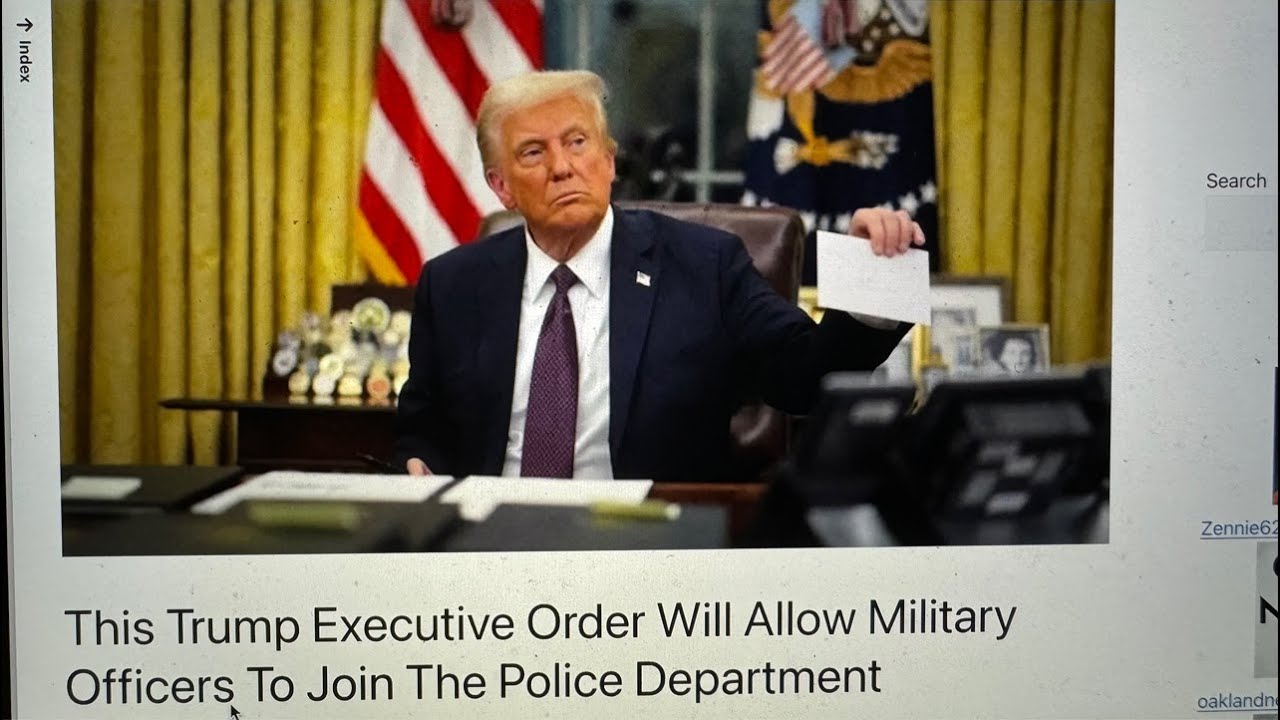


Washington, D.C. (Special to ZennieReport.com) – Once again, President Donald Trump has fooled Americans who do not know their country and how the government works. The Corporation for Public Broadcasting was created via an act of Congress in 1967, specifically The Public Broadcasting Act of 1967 (47 U.S.C. § 396). The President’s Executive Order issued yesterday can’t just wipe out the Corporation for Public Broadcasting; it takes an act of Congress.
As the story goes, according to John Burke in his 1967 book, the act charged the Corporation for Public Broadcasting with encouraging and facilitating program diversity, and expanding and developing non-commercial broadcasting. The Corporation for Public Broadcasting would have the funds to help local stations create innovative programs, thereby increasing the service of broadcasting in the public interest throughout the country.
And the effort to create the Public Broadcasting Act of 1967 was really an effort to amend another act of Congress: The Communications Act of 1934, and “by extending and improving the provisions thereof relating to grants for construction of educational television broadcasting facilities, by authorizing assistance in the construction of non-commercial educational radio broadcasting facilities, by establishing a nonprofit corporation to assist in establishing innovative educational programs, to facilitate educational program availability, and to aid the operation of educational broadcasting facilities; and to authorize a comprehensive study of instructional television and radio; and for other purposes.”
So, here comes President Donald J. Trump, with a approval rating of 39 percent (in other words, in the tank), thinking he can just eliminate funding of the Corporation for Public Broadcasting with the stroke of a pen. He can’t. But, that doesn’t stop him and his staff from trying. And so we get this, in part:
EXECUTIVE ORDER
ENDING TAXPAYER SUBSIDIZATION OF BIASED MEDIA
By the authority vested in me as President by the Constitution and the laws of the United States of America, it is hereby ordered:
Section. Purpose. National Public Radio (NPR) and the Public Broadcasting Service (PBS) receive taxpayer funds through the Corporation for Public Broadcasting (CPB). Unlike in 1967, when the CPB was established, today the media landscape is filled with abundant, diverse, and innovative news options. Government funding of news media in this environment is not only outdated and unnecessary but corrosive to the appearance of journalistic independence.
At the very least, Americans have the right to expect that if their tax dollars fund public broadcasting at all, they fund only fair, accurate, unbiased, and nonpartisan news coverage. No media outlet has a constitutional right to taxpayer subsidies, and the Government is entitled to determine which categories of activities to subsidize. The CPB’s governing statute reflects principles of impartiality: the CPB may not “contribute to or otherwise support any political party.” 47 U.S.C. 396(f)(3); see also id. 396(e)(2).
The CPB fails to abide by these principles to the extent it subsidizes NPR and PBS. Which viewpoints NPR and PBS promote does not matter. What does matter is that neither entity presents a fair, accurate, or unbiased portrayal of current events to taxpaying citizens.
I therefore instruct the CPB Board of Directors (CPB Board) and all executive departments and agencies (agencies) to cease Federal funding for NPR and PBS.
Reaction To Trump Executive Order To Defund NPR and PBS
What follows was reported and written by NPR Media Correspondent David Folkenflik and edited by Deputy Business Editor Emily Kopp, Managing Editor Gerry Holmes and Managing Editor Vickie Walton-James. Under NPR’s protocol for reporting on itself, no corporate official or news executive reviewed this story before it was posted publicly.
PBS President and CEO Paula Kerger called it a “blatantly unlawful Executive Order, issued in the middle of the night.”
CPB is already suing the Trump administration over his executive order seeking to fire three of its five board members; on Friday, it dismissed the validity of the president’s new order.
“CPB is not a federal executive agency subject to the President’s authority,” the corporation wrote in a statement issued Friday morning. “Congress directly authorized and funded CPB to be a private nonprofit corporation wholly independent of the federal government.”
The CPB noted that the statute Congress passed to create it “expressly forbade ‘any department, agency, officer, or employee of the United States to exercise any direction, supervision, or control over educational television or radio broadcasting, or over [CPB] or any of its grantees or contractors.”
Congress said that such funds “may be used at the discretion of the recipient” for producing or acquiring programs to put on the air.
Trump’s newest order appears to envision a continuation of federal subsidies for public radio and television stations — apart from NPR and PBS. It is unclear how that squares with Trump’s pledge to ask Congress to rescind all funds already approved for public broadcasting.
Congress allocates federal funding for CPB and specifies how it shall be spent. The funding is carried out in two-year cycles, ahead of time, a structure designed to help shield public media from political pressure.
Trump, by contrast, has waged rhetorical warfare against it, fueling and channeling his supporters’ distrust of traditional newsgathering.
On social media platforms, Trump recently blasted the two national public broadcasting networks, posting in all caps: “REPUBLICANS MUST DEFUND AND TOTALLY DISASSOCIATE THEMSELVES FROM NPR & PBS, THE RADICAL LEFT ‘MONSTERS’ THAT SO BADLY HURT OUR COUNTRY!”
NPR vowed to fight back in a statement released Friday by Heather Walls, its senior vice president of communications.
“We will vigorously defend our right to provide essential news, information and life-saving services to the American public,” NPR said in the statement. “The President’s order is an affront to the First Amendment rights of NPR and locally owned and operated stations throughout America to produce and air programming that meets the needs of their communities.”
Earlier this week, the Federal Election Commission unanimously dismissed a complaint of bias and illegal electioneering against NPR, finding that the network is engaged in a “legitimate press function.”
How federal funds reach NPR and PBS
Federal funding for public media flows through the congressionally chartered Corporation for Public Broadcasting. Congress allocated $535 million for the CPB for the current fiscal year — an amount affirmed in a recent stop-gap bill passed by the Republican-controlled U.S. House and Senate.
According to the Corporation for Public Broadcasting, Congress has fully funded it through Sept 30, 2027.
At the hearing in late March, heads of both networks spoke of the mission to provide nonpartisan news and programming to the American public, without charge. They said stations would be most vulnerable if federal funding was cut off for public broadcasting.
NPR typically receives about 1% of its funding directly from the federal government, and a slightly greater amount indirectly; its 246 member institutions, operating more than 1,000 stations, receive on average 8% to 10% of their funds from CPB.
By contrast, PBS and its stations receive about 15% of their revenues from CPB’s federal funds.
Most of the funds for public media go to local stations; and most to subsidize television, which is more expensive than radio.
A Government Investigation Of Public Broadcasters
The Trump administration’s assault on public media began just weeks after his inauguration. Trump’s appointee as the nation’s chief broadcast regulator, Federal Communications Commission Chairperson Brendan Carr, launched an investigation of NPR and PBS, contending it appears that their corporate underwriting spots violate laws banning commercial advertisements. Carr has used it to question federal funding of the networks and their non-commercial status.
The networks say they have been encouraged repeatedly by the agency and Congress to develop private financial support and have worked assiduously for years with the FCC to ensure that content falls within FCC guidelines.
PBS offers a heavy amount of educational fare; NPR relies more on news and music. Both provide locally grounded content and reach more than 99% of the population, at no cost. In many states and communities, the stations also serve as a key component of emergency and disaster response systems.
While the CPB is suing the Trump administration over the attempted firings of three of the five board members, were Trump to succeed in doing so, it would appear he would have, for now, erased the quorum necessary for the CPB board to take any actions. That includes, presumably, the elimination of funds for PBS and NPR.
Senator Ed Markey Steps In To Oppose Trump’s Action
Senator Edward J. Markey (D-Mass.), a member of the Commerce, Science, and Transportation Committee, released the following statement:
After President Donald Trump issued an executive order last night attempting to direct the Corporation for Public Broadcasting (CPB) to cease funding for National Public Radio and the Public Broadcasting Service. The Trump administration also today released its budget for fiscal year 2026, which proposes to eliminate all funding for CPB.
“President Trump’s executive order is both illegal and a direct threat to the survival of local public media stations across the country,” said Senator Markey. “These stations are a lifeline for rural and urban communities alike, offering everything from educational children’s programming to life-saving emergency alerts. Eliminating funding for public media punishes free expression and jeopardizes trusted sources of news, culture, and emergency information for communities everywhere. Local stations must have the resources and autonomy to serve their audiences without political interference. I will fight to maintain CPB’s funding and protect the integrity of public broadcasting.”
On April 15, 2025, Senator Markey, along with Senator Lisa Murkowski (R-Alaska), sent a letter to Federal Emergency Management Agency (FEMA) Acting Administrator Cameron Hamilton urging the agency to lift its freeze on grants that help improve the resiliency of public broadcasting stations. Less than two weeks later, FEMA lifted the freeze on those funds.
New Jersey Rep. Frank Pallone Tweets Trump Action Is Illegal
Trump is attacking PBS and NPR, eroding freedom of the press, and putting local news stations out of business.
Reminder: Congress has the power of the purse, not him.The move is illegal and—like most of his power grabs—dead on arrival.
Big Bird will outlast you, Mr. President.
— Rep. Frank Pallone (@FrankPallone) May 2, 2025
Trump Losing In Court So Here Comes Another Loss Regarding NPR and CPB
President Trump is reminding America that we have a democracy because he’s getting his ass kicked in court regarding his executive orders. It’s obvious Trump did not take civics in school, where he would have learned that Congress, and not the President, controls spending. On top of that, Trump can’t just block law firms at will. He lost against Perkins
According to CNN news, a federal judge on Friday ruled that an executive order signed by President Donald Trump targeting a law firm that represented his 2016 presidential opponent was unconstitutional.
US District Judge Beryl Howell ruled that the executive order targeting Perkins Coie violated the First, Fifth and Sixth Amendments, calling it a “blunt exercise of power” that “is not a legitimate use of the powers of the U.S. government or an American President”
“The U.S. Constitution affords critical protections against Executive action like that ordered in EO 1423,” Howell, referring to the executive order, wrote in her 100-plus page opinion. “Government officials, including the President, may not ‘subject … individuals to ‘retaliatory actions’ after the fact for having engaged in protected speech.’”
The firm, which represented Hillary Clinton in 2016 and was involved in voting rights litigation that Trump opposed, was one of several law firms to sue over Trump’s executive orders that took aim at the firms’ security clearances, their access to federal officials and the contractor relationships their clients have with the government.
Perkins Coie and other firms previously secured emergency rulings pausing parts of the Trump directives, but Howell’s ruling Friday night was the first to strike down an executive order targeting a law firm in its entirety and to do so on a permanent basis.
CNN says Howell, who was appointed by President Barack Obama, quotes William Shakespeare, John Adams and the Bill of Rights as she railed against Trump’s directives.
“In a cringe-worthy twist on the theatrical phrase ‘Let’s kill allthe lawyers,’” she wrote, referring to a line from Shakespeare’s “Henry VI,” the executive order “takes the approach of ‘Let’s kill the lawyers I don’t like,’ sending the clear message: lawyers must stick to the party line, or else.”
And AP News reports the Trump Justice Department is racking up a large number losses. To understand the Justice Department’s struggles in representing President Donald Trump’s positions in court, look no further than a quick succession of losses last week that dealt a setback to the administration’s agenda.
In orders spanning different courthouses, judges blocked a White House plan to add a proof-of-citizenship requirement to the federal voter registration form, ruled the Republican administration violated a settlement agreement by deporting a man to El Salvador and halted directives that threatened to cut federal funding for public schools with diversity, equity and inclusion programs.
That’s on top of arguments in which two judges expressed misgivings to a Justice Department lawyer about the legality of Trump executive orders targeting major law firms and a department lawyer’s accidental filing of an internal memo in court questioning the Trump administration’s legal strategy to kill Manhattan’s congestion toll — a blunder the Transportation Department called “legal malpractice.”
According to an Associated Press tally, Trump executive actions have been partially or fully blocked by the courts around 70 times while judges have not impeded the president’s orders in nearly 50 cases. Dozens of others are pending. So President Trump has had 70 executive orders blocked versus 47 intact and 69 pending.
You can kiss Trump’s CPB and NPR Executive Order goodbye.
Stay tuned.